Dental Laser Machine: Features, Applications, Benefits & Buying Guide for Dentists
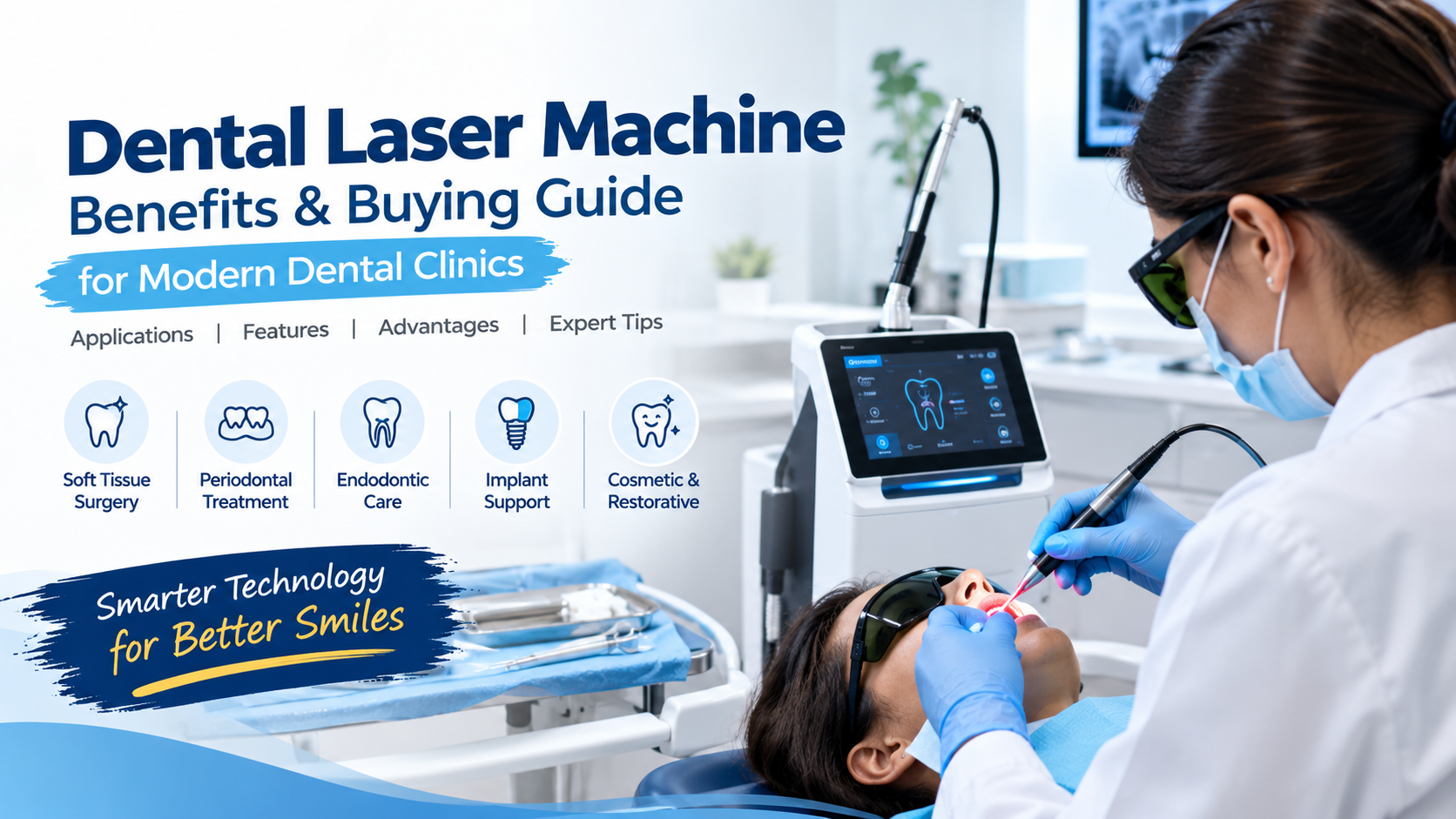
The advancement of modern dentistry has introduced innovative technologies that help dental professionals improve precision, treatment control, and clinical efficiency. A Dental Laser Machine is one such technology that supports selected dental procedures through the controlled delivery of laser energy to oral tissues.
Today, dentists and dental clinics are increasingly exploring laser-assisted procedures as part of modern dental practice. From soft-tissue surgery and gingival contouring to selected periodontal applications, dental lasers can complement conventional treatment techniques when used appropriately.
However, choosing the right equipment requires more than comparing prices or machine specifications. Dental professionals must understand laser wavelengths, clinical applications, operating modes, safety features, training requirements, and after-sales support before making an investment.
In this comprehensive guide, we will explore the working principles, applications, benefits, and important considerations for selecting a Dental Laser Machine for a modern dental clinic.
What Is a Dental Laser Machine?
A Dental Laser Machine is a specialized medical device that uses concentrated light energy to perform specific dental procedures. Depending on the wavelength, design, and approved indications, laser systems may be suitable for soft-tissue procedures, selected hard-tissue applications, or other specialized dental treatments.
Unlike conventional instruments that rely on mechanical cutting or contact, dental lasers deliver optical energy to targeted tissues. The resulting tissue interaction depends on the wavelength, power settings, exposure duration, and characteristics of the treatment area.
Different laser technologies are designed for different clinical purposes. Therefore, dentists should select equipment based on their intended procedures rather than assuming that one machine can perform every dental treatment.
How Does a Dental Laser Machine Work?
A dental laser generates light energy using a specific active medium. This energy is delivered to the treatment area through a compatible handpiece, optical fiber, or other delivery system.
When the laser interacts with oral tissues, its effects depend on how the tissue absorbs the particular wavelength.
Important operating factors include:
- Wavelength: Determines how the laser energy interacts with tissue components.
- Output power: Influences the amount of energy delivered.
- Emission mode: Continuous-wave and pulsed modes can produce different tissue effects.
- Exposure duration: Affects the total energy delivered to the treatment area.
- Delivery system: Influences accessibility, handling, and energy delivery.
- Clinical protocol: Determines how the equipment should be used for a specific procedure.
Understanding these factors helps dental professionals select appropriate settings and follow safe, procedure-specific treatment protocols.
Types of Dental Laser Technology
Different laser systems offer different capabilities. Understanding the main types can help dentists identify equipment that matches their clinical requirements.
1. Diode Dental Laser
Diode lasers are commonly used for selected soft-tissue dental procedures. Depending on the device and its approved indications, applications may include gingival contouring, frenectomy, gingivectomy, and other soft-tissue procedures.
Diode systems are available in different wavelengths and configurations. Their suitability depends on the intended application, output power, delivery system, and clinical evidence supporting their use.
2. Er Laser
Er lasers operate at a wavelength strongly absorbed by water. Depending on the system, they may be used for selected hard-tissue and soft-tissue applications.
Dentists should verify the specific device’s indications and operating requirements before incorporating it into clinical practice.
3. Nd Laser
Nd lasers operate at approximately 1064 nm and may be used in selected soft-tissue and periodontal applications. Their suitability depends on the clinical protocol and the device’s approved indications.
4. CO₂ Laser
CO₂ lasers are strongly absorbed by water and are primarily associated with soft-tissue procedures. They may be considered for selected oral surgical applications where the particular device is appropriate.
Important: These technologies are not interchangeable. The right system depends on the procedure, clinical requirements, device specifications, and professional training.
Major Applications of a Dental Laser Machine
A modern dental practice may use laser technology for selected procedures across different areas of dentistry.
Soft-Tissue Dental Surgery
Certain laser systems can assist with procedures involving oral soft tissues. Depending on the device, these applications may include gingivectomy, gingivoplasty, frenectomy, and tissue contouring.
Laser-assisted techniques can provide controlled tissue interaction and may help with bleeding management in appropriate cases. However, outcomes depend on the procedure, equipment, settings, and clinician expertise.
Periodontal Treatment
Periodontal care focuses on maintaining the health of the gums and supporting structures of the teeth.
Selected dental laser systems may be incorporated into periodontal treatment protocols as an adjunct to conventional care. They should not automatically be considered a replacement for established periodontal treatments, professional cleaning, or other clinically indicated procedures.
Endodontic Applications
Endodontics involves the diagnosis and treatment of diseases affecting the dental pulp and root canal system.
Some laser systems can be used as an adjunct within specific endodontic protocols. Their application must be based on the device’s capabilities, relevant evidence, and established clinical procedures.
Dental Implant Procedures
Laser technology may support selected soft-tissue procedures around dental implants. Dentists must consider the interaction between laser energy, surrounding tissues, and implant components.
Appropriate training and manufacturer guidance are essential to minimise the risk of thermal damage.
Cosmetic and Restorative Dentistry
Depending on the technology, selected dental laser systems may be incorporated into procedures involving gingival contouring and certain cosmetic dental treatments.
Dentists should assess whether the equipment is appropriate for the intended procedure and whether conventional or alternative technologies may be more suitable.
Benefits of Using a Dental Laser Machine
When appropriately selected and used by trained professionals, dental lasers can offer several potential advantages.
1. Controlled Tissue Interaction
Laser energy can be directed towards a specific treatment area. This may be useful for procedures requiring controlled soft-tissue removal or reshaping.
2. Bleeding Management
Some laser systems produce coagulation effects that may help control bleeding during selected procedures, potentially improving visibility in the treatment area.
3. Potential Patient Comfort Benefits
Certain laser-assisted procedures may involve less mechanical contact and may improve comfort in selected situations. However, pain levels, anaesthesia requirements, and recovery experiences vary from patient to patient.
4. Support for Modern Clinical Workflows
Compact laser systems and compatible delivery accessories can help practices integrate selected laser-assisted procedures into their existing workflows.
5. Expanded Treatment Options
Appropriate equipment may allow a clinic to offer additional procedures within the dentist’s professional scope, training, and the device’s approved indications.
These benefits are not guaranteed for every patient or procedure. Dentists should evaluate clinical evidence and discuss suitable treatment options with patients.
How to Choose the Right Dental Laser Machine for Your Clinic
Investing in dental laser technology requires a careful assessment of clinical requirements, equipment specifications, and long-term operating costs.
1. Identify Your Clinical Requirements
Begin by listing the procedures you intend to perform. A dentist focusing on soft-tissue surgery may require different equipment from a practitioner seeking hard-tissue laser applications.
Choose the technology according to the actual needs of your practice.
2. Check the Wavelength and Power Specifications
Review the wavelength, available output power, operating modes, and recommended clinical applications.
Do not compare machines on power ratings alone. Tissue interaction, delivery accessories, operating protocols, and safety features are equally important.
3. Evaluate the Handpiece and Accessories
The handpiece, optical fiber, and associated accessories influence handling and accessibility during procedures.
Ask the supplier about compatible accessories, replacement requirements, cleaning instructions, and availability of consumables.
4. Prioritise Laser Safety
A professional laser system should be supported by clear operating instructions and appropriate safety measures.
Confirm the protective eyewear requirements for the specific wavelength, along with any necessary warning signs, access controls, and equipment safety procedures.
5. Check Training and Clinical Guidance
Training is an important part of introducing laser technology into a dental practice.
Before purchasing, ask about equipment operation, clinical protocols, safety practices, installation, and ongoing technical assistance.
6. Consider After-Sales Support
Reliable service can be important for maintaining equipment availability and managing technical issues.
Evaluate the supplier’s service response, maintenance arrangements, warranty coverage, calibration requirements, and availability of replacement accessories.
7. Compare the Total Cost of Ownership
The purchase price is only one part of the overall investment.
Consider installation, training, consumables, maintenance, servicing, accessories, and other recurring expenses. This provides a more realistic understanding of the long-term cost.
Why Dental Professionals Should Explore IMDSL Laser Solutions
Choosing a medical laser supplier is an important decision for dentists and healthcare professionals. In addition to the equipment itself, clinics should consider technical support, product documentation, training, servicing, and the availability of appropriate accessories.
IMDSL, or Intense Medical & Dental System Pvt. Ltd., provides medical laser technology solutions for multiple clinical specialties, including dentistry, proctology, ENT, urology, physiotherapy, orthopaedics, and cosmetic gynecology.
The company highlights clinical training, technical assistance, and support for integrating laser technology into professional practice.
Dental professionals evaluating a Dental Laser Machine can explore IMDSL’s available solutions and discuss their intended procedures, equipment requirements, and support needs with the company.
Before selecting a particular system, request the relevant technical specifications, intended-use documentation, applicable regulatory details, warranty information, and training arrangements.
To learn more, visit the official website: https://imdsl.co.in/
Common Mistakes to Avoid When Purchasing Dental Laser Equipment
A well-informed purchase can help dental professionals avoid unnecessary expenses and unsuitable equipment.
Choosing Only on Price: A lower purchase price does not necessarily mean better long-term value. Compare specifications, accessories, servicing, and training.
Ignoring Intended Clinical Use: A system suitable for one procedure may not be appropriate for another. Confirm the device’s indications before purchasing.
Overlooking Safety Requirements: Laser safety procedures and wavelength-appropriate protective equipment are essential.
Neglecting Training: Equipment should be used only by appropriately trained professionals following the manufacturer’s instructions.
Assuming All Laser Systems Are the Same: Different wavelengths and configurations produce different tissue interactions and clinical capabilities.
Failing to Check Service Support: Maintenance, troubleshooting, and accessory availability should be considered before making a final decision.
Frequently Asked Questions
1. What is a Dental Laser Machine used for?
A Dental Laser Machine uses concentrated light energy for selected dental procedures. Depending on its specifications and approved indications, it may support soft-tissue surgery, gingival contouring, and selected periodontal or other dental applications.
2. Which type of dental laser is best for a dental clinic?
There is no single best laser for every clinic. The appropriate system depends on the procedures performed, the required wavelength, clinical evidence, equipment specifications, and the dentist’s training.
3. Is a diode dental laser suitable for soft-tissue procedures?
Diode lasers are commonly used for selected soft-tissue applications. The suitability of a particular device depends on its specifications, intended use, and the procedure being performed.
4. What should dentists check before purchasing a dental laser?
Dentists should review wavelength, power settings, operating modes, accessories, safety requirements, product documentation, training, warranty, servicing, and total ownership costs.
5. Does a dental laser replace conventional dental instruments?
No. Dental lasers complement conventional instruments in selected situations. Many procedures still require traditional instruments or other specialised equipment.
6. Why is training important when using dental lasers?
Training helps clinicians understand device operation, tissue interaction, treatment parameters, safety precautions, and procedure-specific protocols. It is essential for responsible clinical use.
7. Where can dentists explore medical laser solutions in India?
Dentists can visit the IMDSL website at https://imdsl.co.in/ to explore available laser technology solutions and contact the company for product information and professional support.
Conclusion
Dental laser technology is becoming an important area of interest for clinics seeking to evaluate modern treatment options. However, choosing suitable equipment requires a clear understanding of clinical applications, wavelength characteristics, safety requirements, training, and long-term support.
A Dental Laser Machine should be selected according to the clinic’s actual needs rather than price or specifications alone. Careful evaluation can help dental professionals make informed decisions and integrate appropriate technology into their clinical workflows.
IMDSL offers medical laser solutions for dental and other healthcare specialties. Visit https://imdsl.co.in/ to explore its portfolio and contact the team for further information about available systems and support services.