Understanding Endodontic Challenges — Why Lasers Matter
The root canal system is a complex and variable three-dimensional network that often includes accessory canals, isthmuses, lateral branches, and apical deltas. These anatomical complexities present challenges for conventional endodontic instruments, which may not always reach every niche where pathogens reside. Persistent bacterial biofilms harbored within dentinal tubules can contribute to treatment failure and recurrent infection. Additionally, patient discomfort, pain sensitivity, and postoperative inflammation remain common concerns during traditional endodontic procedures. Laser technology addresses many of these challenges by providing targeted energy that interacts with tissue and microbes at a microscopic level, enabling clinicians to achieve deeper disinfection, enhanced tissue removal, and improved irrigation activation — all with minimal invasiveness.
Laser Disinfection — Advancing Canal Sterilization
One of the most significant applications of laser technology in endodontics is deep canal disinfection. Endodontic lasers deliver controlled light energy into root canals, effectively reducing bacterial load beyond what mechanical and chemical methods alone can achieve. When laser energy interacts with irrigants or dentin, it produces micro-streaming and photothermal effects that help dislodge and eliminate stubborn biofilms entrenched within canal irregularities. Moreover, certain laser wavelengths exhibit direct bactericidal properties, further enhancing microbial control. This ability to penetrate deeper into dentinal tubules and enhance disinfection helps improve endodontic success rates, reduce postoperative complications, and support predictable long-term outcomes.
Laser-Enhanced Irrigation Activation
Conventional irrigation protocols rely on chemical agents such as sodium hypochlorite and EDTA to dissolve tissue debris and disinfect canals. While effective, these solutions can be limited by their inability to fully penetrate anatomical complexities. Laser-assisted irrigation activation enhances the effectiveness of irrigants by creating dynamic fluid movement within the canal system. When laser pulses are applied to irrigant solution, microscopic cavitation and acoustic streaming occur, significantly improving irrigant penetration into lateral canals and dentinal tubules. This laser-induced enhancement maximizes the debridement of tissue remnants and biofilms, resulting in cleaner, more sterile canal systems prior to obturation.
Pain Management and Patient Comfort
Patient experience is a cornerstone of modern dental care, and lasers have demonstrated notable advantages in enhancing comfort during and after endodontic procedures. Laser energy often reduces the need for extensive mechanical instrumentation, and its precise photothermal interactions limit trauma to surrounding tissues. Many patients report reduced pain perception, decreased sensitivity, and less postoperative discomfort when lasers are incorporated into endodontic therapy. In some cases, lasers can even stimulate local biological responses that support tissue healing, contributing to faster recovery and improved overall patient satisfaction.
Apicoectomy and Surgical Endodontics
Laser technology has also found valuable applications in surgical endodontics, particularly in procedures such as apicoectomy — the removal of the apex of a root and associated infected tissues. In these surgical scenarios, lasers offer precise soft-tissue incision, hemostasis, and ablation of pathological tissues with minimal bleeding. Unlike scalpel-only approaches, laser surgery supports improved visualization of the surgical field, better control of bleeding, and reduced postoperative inflammation. This precision facilitates more predictable surgical outcomes and enhances the healing process in periodontal and periapical tissues.
Photobiomodulation — Supporting Tissue Healing
Beyond disinfection and surgery, certain laser wavelengths are used for photobiomodulation (PBM) — the biological response stimulated by low-level laser energy. PBM has demonstrated potential in reducing inflammation, promoting cellular repair, and enhancing microcirculation in periapical tissues following endodontic intervention. This non-thermal biomodulation supports a more comfortable postoperative experience and may accelerate overall healing, making it a valuable adjunct in comprehensive endodontic care.
Clinical and Procedural Advantages of Laser Endodontics
Integrating laser technology into endodontic practice provides a spectrum of clinical advantages. Lasers deliver enhanced canal disinfection, improved irrigation activation, precise tissue interaction, and minimal collateral trauma. These benefits collectively contribute to a higher standard of care, making complex anatomical debridement more effective and predictable. Additionally, lasers help reduce operative time, enhance visualization, and maintain a sterile field — all of which support better clinical performance and reduce practitioner fatigue. From both patient-centric and clinician-centric perspectives, laser-assisted endodontics represents a significant evolution in dental therapy.
Conclusion — Redefining Root Canal Therapy with Laser Precision
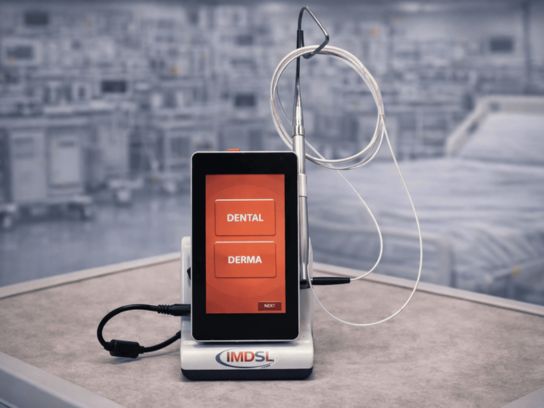
Dental lasers have transformed the landscape of endodontic care by providing clinicians with advanced tools that blend precision, efficiency, and biological compatibility. By enhancing canal sterilization, activating irrigation, supporting surgical procedures, and improving patient comfort, lasers enable dentists to deliver superior outcomes that elevate patient confidence and clinical success. As endodontics continues to evolve toward minimally invasive and biologically driven approaches, laser technology stands at the forefront of innovation — empowering clinicians to achieve deeper disinfection, greater predictability, and long-term restorative success. IMDSL’s laser systems, designed for performance, versatility, and clinical reliability, support this vision by enabling practitioners to harness the full potential of laser technology in modern endodontic care.