Why Laser Technology Matters in Implant Dentistry
Dental implant procedures involve both hard and soft tissues, each with unique biological behavior and healing requirements. Effective implantology demands not only precision in osteotomy preparation but also careful management of soft tissues and bacterial biofilms. Laser systems deliver energy to specific targets with controlled depth and minimal lateral thermal spread, which reduces collateral tissue damage. In soft tissue zones, lasers seal blood vessels, reduce inflammatory response, and help maintain a sterile surgical environment. For hard tissues, certain lasers can assist in bone contouring and preparation while preserving the vitality of adjacent bone cells. These capabilities make lasers particularly important in implantology where both functional and aesthetic results are critical.
Clinical Applications of Lasers in Implantology
Laser technology plays a role across all phases of implant dentistry. During pre-surgical assessment and site preparation, lasers can remove pathological soft tissue, decontaminate implant sites, and support ridge augmentation procedures. In osteotomy and bone modification, specific laser systems help shape or clean bone surfaces with minimal trauma, while preserving bone viability. In the implant placement phase, lasers assist in achieving optimal soft-tissue contours around the implant, creating a biologically favorable environment for osseointegration. After placement, lasers support peri-implant maintenance, helping control bacterial biofilms and reduce the risk of peri-implantitis. Through these versatile applications, laser technology enhances both the surgical and biological aspects of implant care.
Mechanism of Laser Interaction in Implantology
Lasers used in implant dentistry operate at specific wavelengths and power settings tailored to interact with biological tissues in controlled ways. When laser energy contacts tissue, it produces photothermal and photobiomodulation effects. In soft tissues, this can lead to coagulation, surface ablation, and simultaneous sealing of blood vessels. In hard tissues, laser absorption may facilitate controlled bone modification and bacterial reduction. Additionally, photobiomodulation — a biological response stimulated by low-level laser exposure — has been shown to promote cellular metabolism, enhance collagen formation, and improve microcirculation, which are all beneficial to the healing process around implants.
Benefits of Laser-Assisted Implantology
Laser use in implant dentistry offers multiple clinical advantages. Because lasers provide precise, contact-free tissue interaction, surgical trauma is reduced, resulting in less bleeding, swelling, and postoperative discomfort. Excellent coagulation improves the surgeon’s visibility during procedures, enabling more predictable surgical outcomes. Laser energy also has bactericidal effects that help reduce microbial load in surgical sites, which is particularly important in the prevention and management of peri-implant disease. Furthermore, photobiomodulation effects enhance soft-tissue healing and may accelerate osseointegration, contributing to overall implant stability and longevity.
Patient Comfort and Recovery
One of the most notable benefits of laser-assisted implant dentistry is the improvement in patient comfort and recovery experience. Traditional surgical techniques often require sutures, injectable anesthetics, and extended soft-tissue healing. Laser procedures frequently reduce the need for sutures, minimize intraoperative bleeding, and enable a smoother postoperative course. Patients often report reduced pain, lower requirement for analgesics, and earlier return to normal function. Enhanced comfort and faster recovery not only improve patient satisfaction but also support higher acceptance of implant treatment.
IMDSL Laser Solutions for Implantology
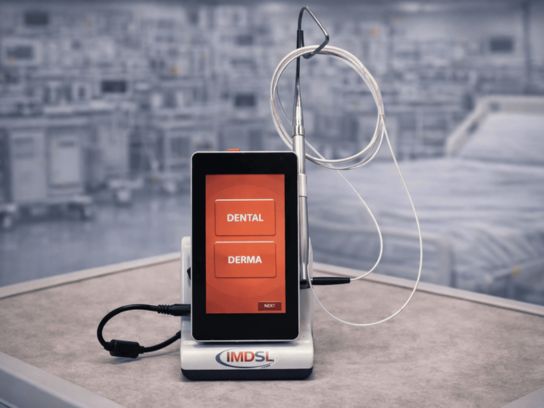
IMDSL offers advanced laser platforms designed for multi-specialty dental applications, including implantology. These systems provide clinicians with adjustable wavelength settings, ergonomic handpieces, and precise power control to suit both hard and soft tissue procedures. IMDSL lasers are engineered for clinical reliability and performance, enabling dentists to incorporate laser-assisted protocols into their implant workflows with confidence. Combined with IMDSL’s clinical support, installation training, and service infrastructure, these solutions help practices elevate their standard of care while maximizing patient outcomes.
Conclusion: The Future of Implant Dentistry is Laser-Driven
Laser technology is redefining the scope of dental implantology by enhancing precision, reducing trauma, and supporting faster healing. By incorporating laser systems into implant protocols — from preoperative site preparation to peri-implant maintenance — dental professionals can achieve more predictable clinical outcomes, greater patient comfort, and improved long-term success. IMDSL remains committed to providing cutting-edge laser solutions that empower implantologists and elevate the quality of care in modern dental practice, making laser-assisted implantology an essential part of the future of dentistry.