Dental Laser Machine: Types, Benefits, Applications, and How to Choose the Right One
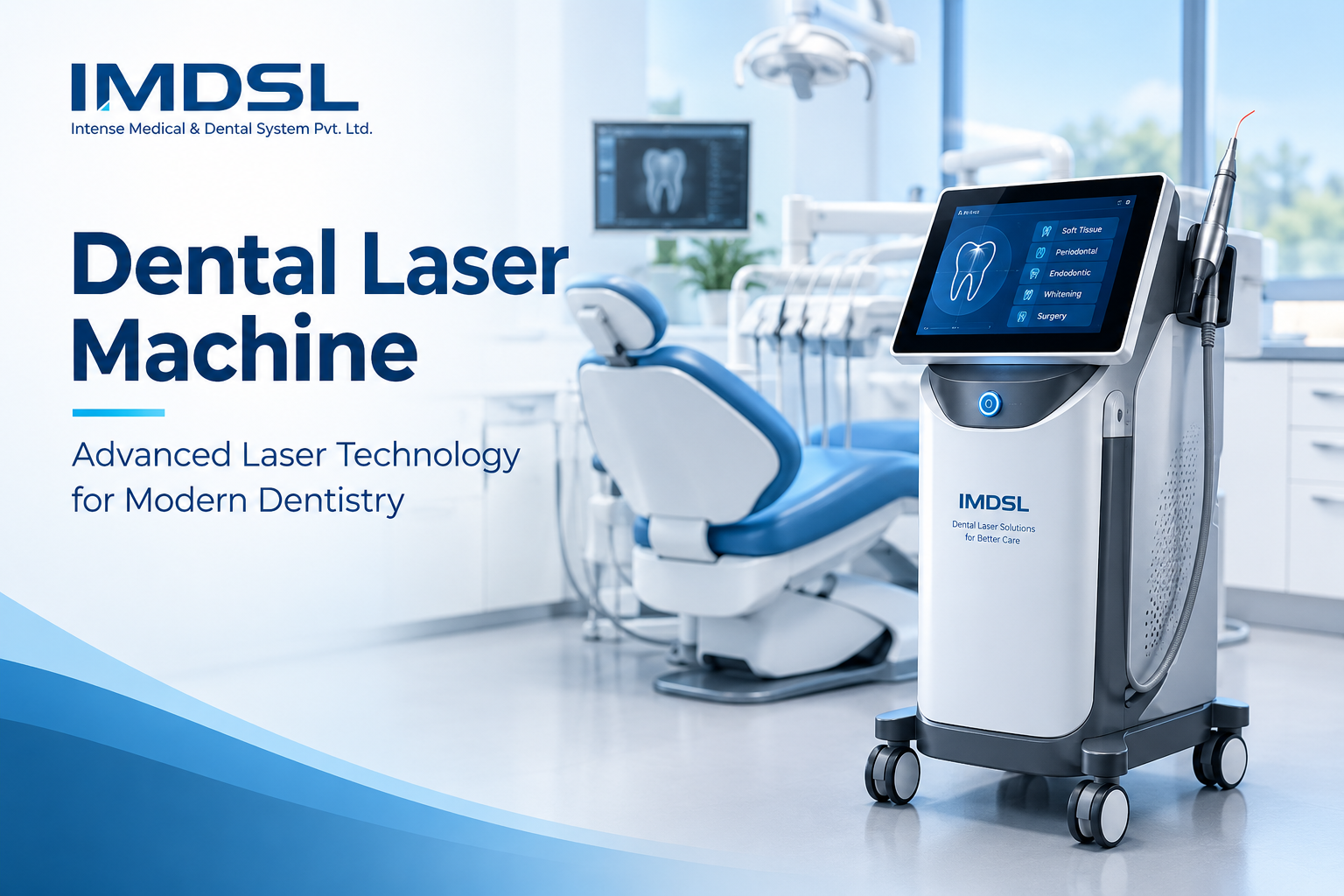
A Dental Laser Machine is an advanced technology used in modern dentistry for a wide range of procedures, including soft-tissue treatments, periodontal therapy, endodontics, teeth whitening, and other dental applications. Compared with conventional techniques, dental lasers can provide precise energy delivery to targeted tissues, helping dentists perform selected procedures with greater control.
As dental practices increasingly adopt minimally invasive technologies, choosing the right Dental Laser Machine has become an important decision for dentists, clinics, and dental hospitals.
In this guide, we will discuss what a dental laser machine is, its types, applications, benefits, important features, and how IMDSL supports dental professionals with advanced laser solutions.
What Is a Dental Laser Machine?
A Dental Laser Machine is a specialized medical device that uses concentrated laser energy for dental procedures. Depending on the wavelength and configuration, a dental laser can be used for soft-tissue or hard-tissue applications.
Different wavelengths interact differently with water, pigments, and other components of biological tissue. Therefore, selecting the appropriate wavelength and power settings is essential for achieving the intended clinical result.
Modern dental laser systems are designed to provide dentists with controlled energy delivery, adjustable treatment parameters, and multiple clinical protocols.
Why Are Dental Lasers Becoming Popular?
Modern dentistry focuses increasingly on precision, patient comfort, minimally invasive procedures, and efficient clinical workflows. Dental laser technology can support these objectives in appropriate clinical situations.
A Dental Laser Machine may help dentists:
- Perform precise soft-tissue procedures
- Reduce unnecessary tissue trauma in suitable cases
- Support periodontal treatments
- Assist in endodontic procedures
- Perform selected surgical procedures
- Improve treatment control
- Support faster and more comfortable clinical procedures in appropriate cases
- Expand the range of procedures available in a dental practice
The exact benefits depend on the laser wavelength, treatment protocol, clinical indication, and the dentist’s expertise.
Types of Dental Laser Machines
Dental lasers can generally be categorized according to their wavelength, active medium, and clinical application.
1. Diode Dental Laser
Diode lasers are commonly used for soft-tissue procedures. They can be useful in procedures involving gingival tissue and periodontal applications.
Typical applications may include:
- Gingivectomy
- Gingivoplasty
- Frenectomy
- Gingival contouring
- Periodontal procedures
- Soft-tissue surgery
- Dental bleaching support
Diode lasers are popular because many systems are compact and designed for use in multiple soft-tissue applications.
2. Er: YAG Laser
Er:YAG lasers operate at a wavelength that is highly absorbed by water. They can be used in selected hard- and soft-tissue dental procedures.
Potential applications include:
- Caries-related procedures
- Hard-tissue treatment
- Periodontal treatment
- Bone-related procedures
- Soft-tissue procedures
The exact indications depend on the specific device and regulatory approvals.
3. Nd:YAG Laser
Nd:YAG lasers operate at approximately 1064 nm and can be used in various soft-tissue and periodontal applications.
They may be used for:
- Periodontal therapy
- Soft-tissue procedures
- Bacterial reduction protocols
- Selected endodontic applications
4. CO₂ Dental Laser
CO₂ lasers are strongly absorbed by water and are primarily associated with soft-tissue procedures.
They may be used for:
- Oral soft-tissue surgery
- Gingival procedures
- Tissue ablation
- Selected oral surgical applications
Applications of a Dental Laser Machine
The versatility of laser technology makes it useful across several areas of dentistry.
Periodontal Treatment
Dental lasers can be incorporated into selected periodontal treatment protocols. Depending on the wavelength and clinical protocol, laser energy may assist with tissue management and bacterial reduction.
Endodontics
Laser technology can also be incorporated into root canal treatment protocols. Certain wavelengths can be used as an adjunct to conventional endodontic procedures for cleaning and disinfection.
Gingival Procedures
A Dental Laser Machine can provide controlled energy delivery for procedures involving gingival tissue.
Applications may include:
- Gingival reshaping
- Gingivectomy
- Gingivoplasty
- Crown-lengthening support
- Frenectomy
Dental Bleaching
Some dental laser systems can be used as part of professional teeth-whitening protocols. The laser system and bleaching material must be used according to the manufacturer’s recommended protocol.
Oral Surgery
Selected dental lasers can assist with soft-tissue surgical procedures where appropriate.
Peri-Implant and Implant-Related Procedures
Certain laser systems may be incorporated into implant-related treatment protocols, including selected peri-implant soft-tissue and decontamination procedures.
Benefits of Using a Dental Laser Machine
The advantages of dental lasers vary according to the procedure, wavelength, and treatment protocol. Commonly cited benefits include:
Precision
Laser energy can be delivered to a targeted area, allowing dentists to work with controlled energy parameters.
Minimally Invasive Approach
For suitable procedures, laser treatment may help reduce mechanical trauma compared with some conventional techniques.
Patient Comfort
Some laser procedures may require less mechanical instrumentation, which can contribute to improved patient comfort in appropriate cases.
Reduced Bleeding
Certain soft-tissue lasers can provide coagulation during tissue procedures, which may help with bleeding control.
Versatility
A suitable multi-purpose laser system can support different dental applications, depending on its wavelength and approved indications.
Modern Clinical Workflow
Laser technology can become an additional tool in a modern dental practice, complementing conventional dental equipment and techniques.
Important Features to Consider Before Buying a Dental Laser Machine
Choosing a Dental Laser Machine should not be based only on price. Dentists should evaluate the complete system and its intended clinical applications.
Wavelength
The wavelength is one of the most important factors because it determines how laser energy interacts with different tissues.
Power and Energy Settings
Look for a system that offers appropriate control over power, energy, pulse duration, and frequency according to the intended procedures.
Treatment Protocols
Pre-set or customizable protocols can make it easier for trained dental professionals to configure the machine for different applications.
Ease of Use
A user-friendly interface can help streamline clinical workflows and reduce unnecessary complexity.
Handpieces and Accessories
Check which handpieces, tips, fibers, and accessories are available and whether they match your intended procedures.
Training and Technical Support
Proper training is essential for safe and effective laser use. Consider the availability of product training, clinical guidance, maintenance, and technical support.
Manufacturer Reliability
A dental laser is a long-term investment. The manufacturer’s reputation, product support, service network, warranty, and availability of consumables should also be considered.
Dental Laser Machine Price in India
The price of a Dental Laser Machine in India can vary considerably depending on the wavelength, power, technology, number of applications, accessories, configuration, and manufacturer.
Instead of choosing a machine solely on the basis of its initial price, dental professionals should consider:
- Clinical applications
- Laser wavelength
- Output power
- Available protocols
- Accessories
- Warranty
- Training
- After-sales service
- Maintenance requirements
- Consumable costs
A machine that matches the clinic’s actual treatment requirements can provide greater practical value over the long term.
How to Choose the Right Dental Laser Machine for Your Clinic
Before purchasing a laser system, define the procedures for which you intend to use it.
For example, a dentist primarily interested in soft-tissue procedures may have different requirements from a practitioner looking for periodontal, endodontic, or multi-disciplinary applications.
A practical evaluation can include:
Step 1: Identify your clinical requirements
List the procedures you want to perform using laser technology.
Step 2: Select the appropriate wavelength
Different wavelengths have different tissue interactions and clinical applications.
Step 3: Compare machine specifications
Evaluate power range, operating modes, pulse settings, handpieces, and available protocols.
Step 4: Check training and support
Ensure that proper training and technical support are available.
Step 5: Evaluate the complete cost
Consider equipment, accessories, consumables, maintenance, and service.
Step 6: Request a demonstration
A live demonstration can help you understand the equipment’s interface, operation, and clinical workflow before making a purchase.
Why Choose IMDSL for Dental Laser Technology?
IMDSL provides advanced laser technology designed to support modern medical and dental professionals. Its range of laser systems is developed for different clinical requirements and applications.
For dental professionals looking for a Dental Laser Machine, IMDSL offers laser solutions with a focus on technology, clinical usability, and professional support.
Before selecting a system, dentists can evaluate their clinical requirements and discuss the appropriate laser configuration with the IMDSL team.
Frequently Asked Questions About Dental Laser Machines
What is a Dental Laser Machine used for?
A Dental Laser Machine can be used for various dental procedures, including selected soft-tissue, periodontal, endodontic, surgical, and bleaching applications, depending on the laser’s wavelength and approved indications.
Is a dental laser better than conventional dental equipment?
Laser technology and conventional instruments serve different purposes. A laser can be an effective additional tool for selected procedures, but the appropriate technology depends on the clinical indication and dentist’s treatment plan.
Which wavelength is best for dental treatment?
There is no single wavelength that is best for every dental procedure. Different wavelengths have different tissue interactions and applications. The appropriate wavelength depends on the intended clinical use.
How much does a Dental Laser Machine cost in India?
The cost varies according to the machine’s technology, wavelength, power, configuration, accessories, and manufacturer. Dentists should compare the complete system rather than focusing only on the purchase price.
Does a dentist need training to use a laser machine?
Yes. Appropriate education and hands-on training are important for understanding laser parameters, safety procedures, clinical protocols, and proper device operation.
Final Thoughts
A Dental Laser Machine can be a valuable addition to a modern dental practice when the technology is selected according to clinical requirements and used by appropriately trained professionals. From soft-tissue procedures and periodontal applications to selected endodontic and surgical protocols, dental lasers can expand the range of technologies available to dentists.
When choosing a dental laser, consider the wavelength, clinical applications, power settings, protocols, accessories, training, service support, and overall cost.
With its focus on advanced laser technology, IMDSL can help dental professionals explore laser solutions suited to their clinical requirements.