Varicose Veins Laser Treatment Machine: Advanced Technology for Modern Vein Treatment
Varicose Veins Laser Treatment Machine: Varicose veins are a common vascular condition that affects millions of people worldwide. They usually appear as enlarged, twisted, or swollen veins, particularly in the legs. Apart from their visible appearance, varicose veins can also cause discomfort, heaviness, swelling, and pain. With advancements in medical technology, laser-based procedures have become an important treatment option for suitable patients.
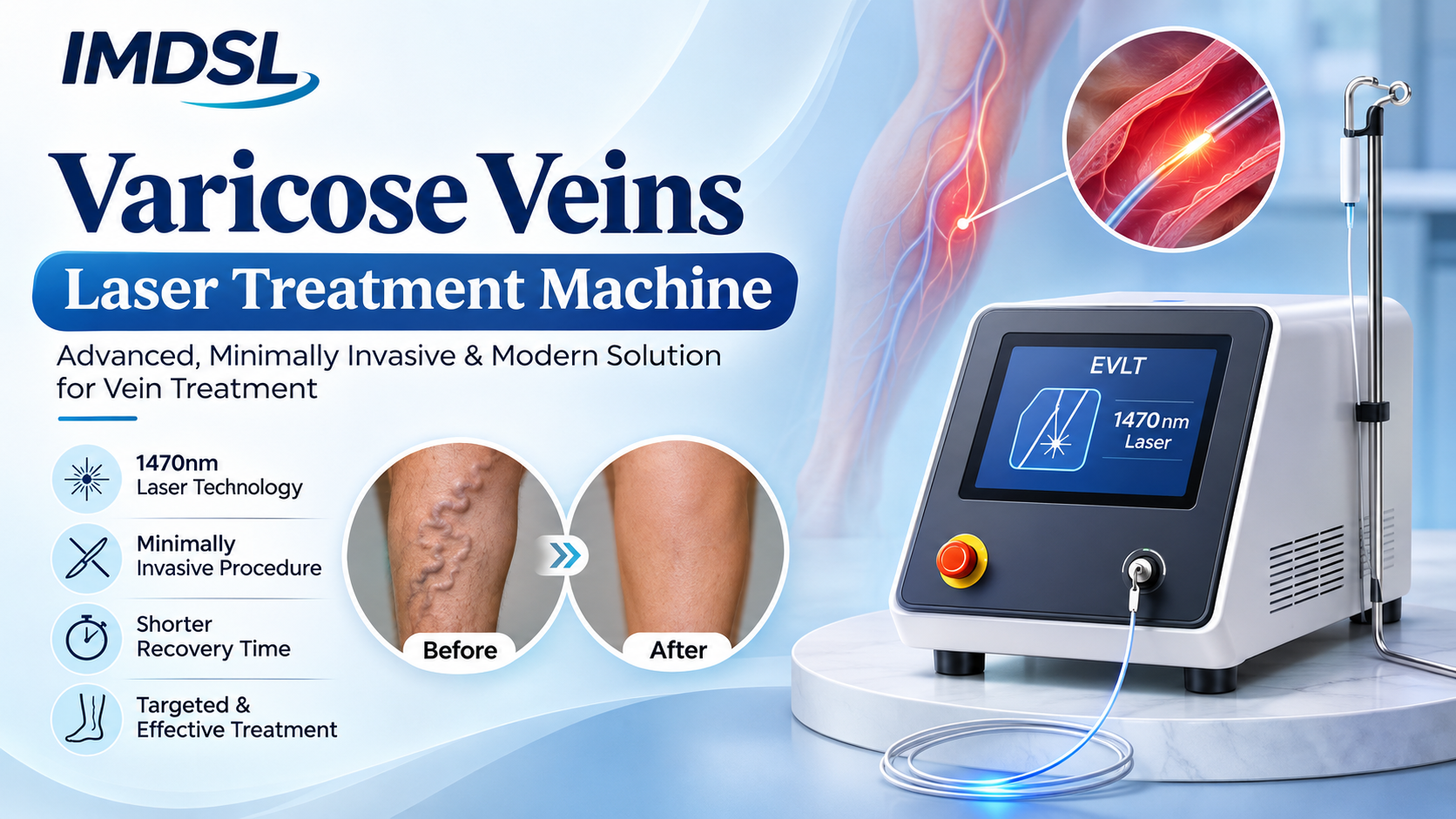
A Varicose Veins Laser Treatment Machine is an advanced medical device designed to support minimally invasive procedures for treating affected veins. Using controlled laser energy, these machines help medical professionals perform endovenous laser treatment (EVLT), also known as endovenous laser ablation (EVLA).
For modern vascular clinics, hospitals, and specialised treatment centres, laser technology offers an alternative to traditional surgical approaches in appropriately selected cases.
In this guide, we will explore how a varicose veins laser treatment machine works, its applications, benefits, important features, and the role of advanced laser technology in vascular care.
What Is a Varicose Veins Laser Treatment Machine?
A Varicose Veins Laser Treatment Machine is specialised medical equipment used during laser-based procedures for managing varicose veins. It delivers laser energy through an optical fibre inserted into the targeted vein under medical imaging guidance.
The technology is commonly used in a procedure called Endovenous Laser Treatment (EVLT).
During this procedure, laser energy generates controlled heat inside the targeted vein, causing the vein wall to close. Blood circulation is then redirected through healthier veins.
Modern endovenous laser systems may use specific wavelengths, such as 1470nm, which are designed to interact with water in the surrounding vein tissue.
The selection of wavelength, laser settings, and treatment protocol depends on the patient’s condition, vein characteristics, and the treating specialist’s clinical judgement.
How Does Endovenous Laser Treatment (EVLT) Work?
Endovenous Laser Treatment is a minimally invasive medical procedure performed by trained vascular specialists.
Unlike conventional vein surgery, which may require larger incisions, EVLT uses laser energy delivered through a thin optical fibre.
Here is a general overview of the procedure:
1. Patient Assessment
The doctor evaluates the affected veins and typically uses duplex ultrasound to identify the location, size, and extent of venous reflux.
2. Preparation
The treatment area is prepared using appropriate medical protocols. Local anaesthesia and ultrasound guidance are commonly used.
3. Laser Fibre Placement
A specialised optical fibre is introduced into the targeted vein through a small access point under ultrasound guidance.
4. Controlled Laser Energy Delivery
The Varicose Veins Laser Treatment Machine delivers controlled laser energy through the fibre. This produces thermal energy that causes the targeted vein to close.
5. Post-Treatment Assessment
The specialist checks the treated area and provides appropriate aftercare instructions. Follow-up assessments may include ultrasound examinations.
The procedure and recovery experience can vary depending on the patient’s health, vein anatomy, and treatment plan.
Why Is 1470nm Laser Technology Used for Varicose Veins?
Laser wavelength plays an important role in endovenous treatment.
The 1470nm wavelength is widely used in modern EVLT systems because it has strong absorption in water, which is present in the vein wall and surrounding tissues.
Some important characteristics include:
-
Water Absorption: The wavelength interacts strongly with water-containing tissue.
-
Controlled Energy Delivery: Supports targeted thermal treatment when used with appropriate clinical settings.
-
Modern Fibre Compatibility: Can be used with specialised radial and other compatible optical fibre designs.
-
Minimally Invasive Application: Supports endovenous procedures without conventional large surgical incisions.
The effectiveness and safety of treatment depend on more than wavelength alone. Fibre design, energy settings, vein anatomy, ultrasound guidance, and clinical expertise are also important.
Key Features of a Modern Varicose Veins Laser Treatment Machine
When selecting an endovenous laser treatment machine, healthcare professionals should consider its technical capabilities, safety features, and compatibility with clinical requirements.
Some important features include:
1. Advanced Laser Wavelength
Modern systems may offer 1470nm laser technology for endovenous vascular applications.
2. Adjustable Power Settings
Adjustable laser output allows trained specialists to select suitable treatment parameters according to the procedure and clinical protocol.
3. Continuous and Controlled Energy Delivery
A reliable laser system should provide consistent energy delivery during treatment.
4. User-Friendly Interface
A clear display and intuitive controls can help medical professionals manage treatment settings efficiently.
5. Optical Fibre Compatibility
Compatibility with suitable endovenous fibres is important for performing different treatment protocols.
6. Safety and Monitoring Features
Integrated system monitoring, appropriate safety controls, and reliable performance are important considerations when choosing medical laser equipment.
Benefits of Laser Treatment for Varicose Veins
Laser-based treatment offers several potential advantages over conventional surgical approaches for appropriately selected patients.
1. Minimally Invasive Procedure
EVLT generally involves a small access point rather than the larger incisions associated with traditional vein surgery.
2. Reduced Tissue Disruption
The procedure targets the affected vein using controlled thermal energy.
3. Outpatient Treatment Potential
Many patients can undergo endovenous laser procedures without an overnight hospital stay, depending on their clinical condition and local medical protocols.
4. Relatively Short Recovery
Many patients return to normal daily activities sooner than after traditional vein surgery, although recovery varies.
5. Targeted Treatment
Ultrasound guidance helps specialists identify and treat the affected vein.
6. Modern Vascular Treatment Option
EVLT provides another treatment option for patients with suitable venous anatomy and clinical indications.
Applications of a Varicose Veins Laser Treatment Machine
A specialised endovenous laser system may be used for several vascular treatment applications, depending on its specifications and approved intended use.
Common applications include:
-
Endovenous Laser Treatment (EVLT)
-
Endovenous Laser Ablation (EVLA)
-
Treatment of selected cases of great saphenous vein reflux
-
Treatment of selected cases of small saphenous vein reflux
-
Management of certain symptomatic varicose veins
-
Minimally invasive vascular procedures
It is important to understand that not every varicose vein is suitable for laser treatment. A vascular specialist must evaluate the patient’s condition before recommending a procedure.
Laser Treatment vs Traditional Varicose Vein Surgery
Medical technology has introduced several options for treating varicose veins. The choice depends on the patient’s condition, the affected veins, and the specialist’s recommendation.
| Parameter | Laser Treatment (EVLT) | Traditional Surgery |
|---|---|---|
| Technique | Endovenous laser energy | Surgical vein removal or ligation |
| Access | Small access point | Surgical incisions |
| Invasiveness | Minimally invasive | More invasive |
| Anaesthesia | Often local anaesthesia | Depends on procedure |
| Recovery | Generally shorter | May require longer recovery |
| Imaging | Ultrasound guidance | Depends on procedure |
Both approaches have specific clinical indications. A qualified specialist determines which treatment is most appropriate.
How to Choose the Right Varicose Veins Laser Treatment Machine?
Selecting the right medical laser equipment is an important decision for hospitals, vascular clinics, and healthcare professionals.
Before purchasing a machine, consider the following factors:
1. Laser Wavelength: Check whether the system offers a wavelength suitable for the intended vascular application.
2. Power Output: Evaluate the available laser power and adjustable treatment settings.
3. Fibre Compatibility: Ensure compatibility with the required endovenous optical fibres.
4. Safety Features: Look for appropriate system monitoring and safety mechanisms.
5. Ease of Operation: A user-friendly interface can improve workflow and operational convenience.
6. Technical Support: Choose a supplier that provides installation guidance, technical assistance, and after-sales support.
7. Training and Documentation: Proper operator training and product documentation are essential for safe clinical use.
Why Choose IMDSL for Advanced Medical Laser Technology?
Choosing the right medical equipment partner is just as important as selecting the technology itself.
IMDSL focuses on providing advanced laser technology solutions for modern medical and clinical applications.
For healthcare professionals exploring vascular laser equipment, understanding product specifications, clinical applications, and system compatibility is essential.
When evaluating medical laser solutions from IMDSL, healthcare providers should consider:
-
Advanced medical laser technology solutions
-
Equipment designed for professional clinical applications
-
Technical product information and specifications
-
Assistance with equipment selection
-
Product-related guidance and support
IMDSL aims to support healthcare professionals in exploring modern medical laser technologies and identifying equipment suited to their clinical requirements.
Whether you are establishing a vascular treatment facility or upgrading existing medical equipment, selecting a suitable laser system can be an important step towards modernising your clinical setup.
Future of Laser Technology in Varicose Vein Treatment
The medical laser industry continues to evolve with improvements in wavelength technology, fibre design, energy delivery, and treatment systems.
Modern endovenous laser platforms are increasingly focused on precision, operational control, and compatibility with minimally invasive treatment approaches.
As clinical research and medical technology advance, laser-based vascular procedures will continue to play an important role in the management of selected venous conditions.
For hospitals and vascular specialists, investing in appropriate equipment, professional training, and evidence-based treatment protocols remains essential.
Frequently Asked Questions (FAQs)
1. What is a Varicose Veins Laser Treatment Machine?
A Varicose Veins Laser Treatment Machine is medical equipment used to deliver laser energy through an optical fibre during endovenous laser procedures. It helps specialists close selected diseased veins using controlled thermal energy.
2. What is EVLT in varicose vein treatment?
EVLT stands for Endovenous Laser Treatment. It is a minimally invasive procedure in which laser energy is delivered inside an affected vein to close it and redirect blood flow through healthier veins.
3. Which wavelength is commonly used for varicose vein laser treatment?
The 1470nm wavelength is commonly used in modern endovenous laser treatment systems because of its strong absorption in water-containing tissues.
4. Is laser treatment for varicose veins minimally invasive?
Yes. EVLT is generally considered minimally invasive because it uses a small access point and an optical fibre instead of conventional large surgical incisions.
5. How long does varicose vein laser treatment take?
The duration depends on the number of veins being treated, their anatomy, and the treatment plan. The treating specialist can provide an appropriate estimate.
6. Is EVLT suitable for every patient?
No. Suitability depends on the patient’s venous anatomy, ultrasound findings, medical history, and clinical condition. A vascular specialist must evaluate the patient before recommending treatment.
7. What should hospitals consider before buying an EVLT laser machine?
Hospitals should evaluate wavelength, power output, fibre compatibility, safety features, ease of operation, technical support, training, and the manufacturer’s product documentation.
8. What is the difference between EVLT and EVLA?
EVLT (Endovenous Laser Treatment) and EVLA (Endovenous Laser Ablation) are commonly used terms for the same general laser-based procedure used to close affected veins from inside.
9. Does laser treatment permanently remove varicose veins?
The treated vein is closed rather than physically removed. Symptoms and visible veins may improve, but new varicose veins can develop over time, so follow-up may be necessary.
10. Where can healthcare professionals explore medical laser equipment?
Healthcare professionals can explore medical laser technology and equipment solutions through IMDSL to understand available systems, technical specifications, and clinical applications.
Conclusion
The Varicose Veins Laser Treatment Machine represents an important advancement in modern vascular treatment technology. Through endovenous laser procedures, specialists can treat selected cases of varicose veins using controlled laser energy and minimally invasive techniques.
With technologies such as 1470nm laser systems, modern vascular treatment equipment supports precision-focused clinical procedures and improved treatment workflows.
For hospitals, vascular clinics, and medical professionals looking to explore advanced laser equipment, IMDSL offers a platform to learn more about modern medical laser technology and equipment solutions.
Choosing the right machine, understanding its specifications, and ensuring proper clinical training are essential for achieving safe and effective treatment outcomes.
Medical Disclaimer: This article is intended for informational and educational purposes only. Treatment decisions must be made by qualified healthcare professionals based on individual patient assessment and current clinical guidelines.