Varicose Veins Laser Treatment Machine: Uses, Benefits, Working & How to Choose the Right Machine
Varicose veins are enlarged, twisted veins that commonly appear on the legs when blood does not flow efficiently back toward the heart. Along with their visible appearance, varicose veins can be associated with symptoms such as leg heaviness, aching, swelling, itching, and discomfort.
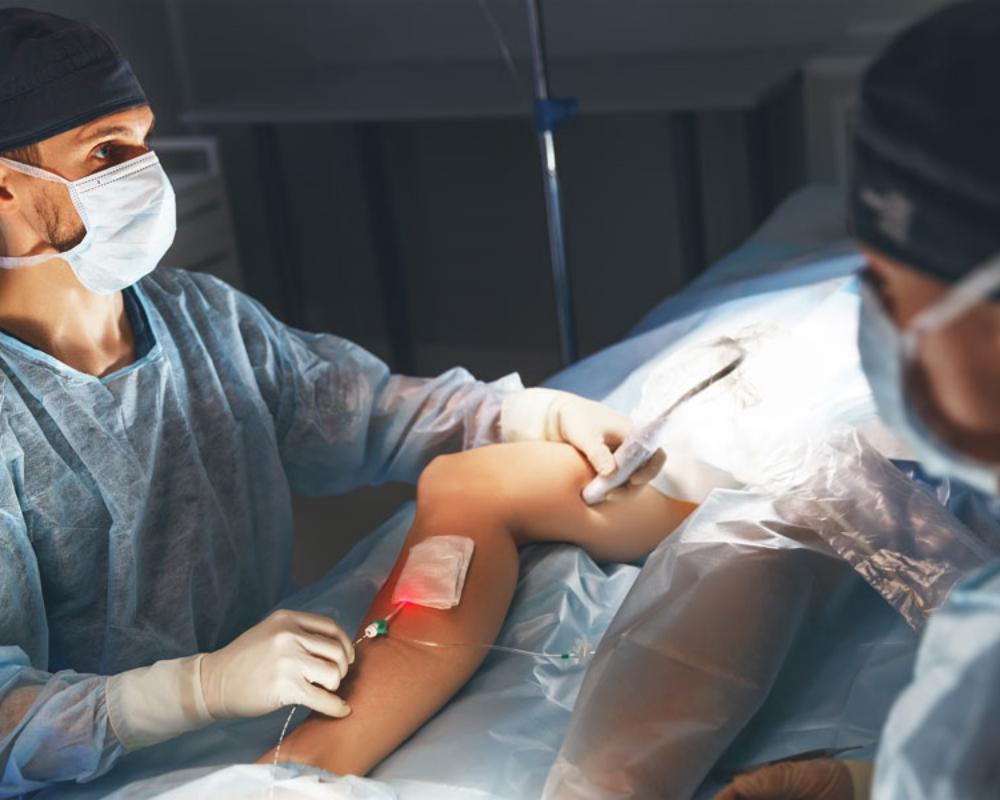
With the development of minimally invasive vascular procedures, laser treatment for varicose veins has become an important option for appropriately selected patients. A Varicose Veins Laser Treatment Machine is designed to deliver controlled laser energy through a suitable fiber to treat incompetent veins during an endovenous laser ablation (EVLA) procedure.
Modern systems, particularly those using wavelengths such as 1470 nm, are used with different fiber designs depending on the treatment technique and clinical requirements. Clinical studies have reported high vein-occlusion rates with 1470 nm EVLA, although treatment outcomes depend on patient selection, vein anatomy, laser settings, fiber type, and the clinician’s technique.
What Is a Varicose Veins Laser Treatment Machine?
A Varicose Veins Laser Treatment Machine is a medical laser system used by trained healthcare professionals for endovenous laser procedures. Instead of surgically removing the affected vein, the procedure uses laser energy to heat and close the targeted vein.
Once the treated vein is closed, blood can be redirected through healthier veins.
The machine generally works as part of a complete treatment setup that may include:
- Medical laser generator
- Appropriate laser fiber
- Fiber delivery system
- Energy and power controls
- Footswitch or activation controls
- Safety features
- Compatible accessories for the selected procedure
The exact configuration varies between manufacturers and models.
How Does Laser Treatment for Varicose Veins Work?
The treatment is commonly performed under ultrasound guidance.
A simplified overview of the procedure is:
1. Patient Assessment
The doctor evaluates the patient’s symptoms, medical history, vein anatomy, and circulation. Duplex ultrasound is commonly used to identify venous reflux and determine which veins may be suitable for treatment.
2. Ultrasound-Guided Access
After preparing the treatment area, the doctor accesses the targeted vein using a minimally invasive technique.
3. Fiber Placement
A laser fiber is positioned inside the affected vein under ultrasound guidance.
4. Controlled Laser Energy Delivery
The varicose veins laser treatment machine delivers controlled laser energy through the fiber. The thermal energy causes the targeted vein to close.
5. Blood Flow Redirects
After successful closure, blood is naturally redirected through other functioning veins.
The treatment technique, energy level, wavelength, fiber design, and pullback speed are selected by the treating clinician according to the patient’s anatomy and the intended procedure.
Why Are 1470 nm Lasers Used for Varicose Vein Treatment?
1470 nm laser technology has been widely studied for endovenous laser ablation.
Research has investigated 1470 nm systems with both bare and radial fiber designs. Some studies have reported reduced postoperative pain and bruising with radial fibers and 1470 nm systems compared with older combinations such as 980 nm bare-tip fibers.
A randomized clinical trial comparing 1470 nm EVLA with radiofrequency ablation found similar one-year vein occlusion outcomes between the two techniques, demonstrating that both are established endovenous thermal approaches when appropriately used.
However, a higher or specific wavelength alone does not guarantee a better clinical outcome. The complete treatment protocol, fiber selection, energy delivery, ultrasound guidance, and clinician expertise are all important.
Key Features of a Modern Varicose Veins Laser Machine
When evaluating a laser system for vascular applications, healthcare professionals may consider several technical and practical factors.
1. Appropriate Laser Wavelength
The wavelength should be suitable for the intended vascular procedure and compatible with the available fibers.
2. Controlled Power and Energy
Precise control over laser output allows clinicians to select treatment parameters according to the procedure.
3. Fiber Compatibility
Different fiber designs can influence how laser energy is delivered to the vein. Radial fibers, for example, distribute energy differently from traditional bare-tip fibers.
4. User-Friendly Controls
An intuitive interface can make it easier for trained clinicians to monitor and adjust treatment parameters.
5. Safety Features
Medical laser equipment should incorporate appropriate safety mechanisms and be used according to the manufacturer’s instructions and applicable medical-device requirements.
6. Reliable Performance
For clinics and hospitals, consistent performance, service support, training, and availability of compatible accessories are important considerations when selecting a medical laser system.
Benefits of Endovenous Laser Treatment
When clinically appropriate, endovenous laser ablation can offer several advantages compared with traditional surgical vein stripping.
Minimally Invasive Procedure
EVLA is performed through a small access point rather than requiring a large surgical incision.
Targeted Treatment
Laser energy can be delivered directly to the selected vein through a fiber.
Outpatient-Based Treatment
Depending on the patient and clinical setup, endovenous laser procedures can often be performed without a prolonged hospital stay.
Less Invasive Than Traditional Vein Stripping
Endovenous thermal techniques have contributed to the shift away from conventional high ligation and stripping for many patients with suitable venous disease.
Established Clinical Evidence
Multiple clinical studies have evaluated 1470 nm EVLA, including studies reporting high rates of vein occlusion and improvement in clinical symptoms.
Varicose Veins Laser Treatment Machine vs Traditional Surgery
Traditional treatment for varicose veins may involve surgical removal or ligation of affected veins. Endovenous laser treatment uses thermal energy delivered inside the vein.
| Feature | Laser Treatment | Traditional Vein Surgery |
|---|---|---|
| Treatment approach | Endovenous thermal ablation | Surgical removal/ligation |
| Access | Small puncture/access point | Surgical incisions |
| Laser fiber | Required | Not required |
| Ultrasound guidance | Commonly used | May be used depending on procedure |
| Invasiveness | Minimally invasive | More invasive |
| Recovery | Generally shorter for suitable patients | May require longer recovery |
| Treatment selection | Depends on vein anatomy | Depends on clinical condition |
The appropriate treatment should always be determined by a qualified vascular specialist after clinical and ultrasound assessment.
What Conditions Can Be Treated With Endovenous Laser Technology?
Endovenous laser treatment is primarily associated with venous insufficiency and varicose veins, particularly incompetent superficial veins such as the great saphenous vein.
Research has also examined 1470 nm EVLA for other venous segments, including small saphenous and perforating veins, although the appropriate technique varies according to anatomy and clinical indication.
It is important to understand that not every varicose vein is automatically suitable for laser treatment. A vascular specialist needs to assess the underlying venous problem before selecting a procedure.
How to Choose the Right Varicose Veins Laser Treatment Machine?
Healthcare facilities should consider more than just the laser wavelength when purchasing a vascular laser system.
Consider the Following:
Wavelength:
Check whether the wavelength is suitable for your intended vascular procedures.
Power Range:
The system should provide an appropriate and controllable power range for the procedures performed at your facility.
Fiber Options:
Check compatibility with the fiber types used by your clinical team.
Energy Control:
Accurate energy delivery is important for controlled treatment.
Ease of Operation:
A clear interface can help trained professionals operate the system efficiently.
Safety:
Review built-in safety features, operating protocols, and laser safety requirements.
Training & Technical Support:
After-sales support, clinical training, maintenance, and availability of accessories can be important for long-term use.
Regulatory Compliance:
Before purchasing medical equipment, healthcare providers should verify the applicable regulatory approvals, certifications, and documentation for their country and intended use.
What Makes 1470 nm Laser Technology Different?
The interaction between laser energy and tissue depends on several factors, including wavelength, fiber design, energy density, and tissue characteristics.
Studies comparing 1470 nm with older wavelengths have found that certain 1470 nm and radial-fiber combinations can achieve effective vein closure while using different energy delivery parameters. One randomized study comparing 1470 nm radial-fiber treatment with 980 nm bare-tip treatment reported similar short-term occlusion but lower postoperative pain and bruising in the 1470 nm radial-fiber group.
Another randomized trial comparing 940 nm and 1470 nm EVLA reported less pain and shorter analgesic use during the first postoperative week with the 1470 nm treatment, while treatment success rates were similar.
These findings support the importance of considering the complete laser-fiber system and treatment protocol, rather than looking at wavelength alone.
Is Varicose Veins Laser Treatment Safe?
Endovenous laser ablation is an established minimally invasive treatment, but like any medical procedure, it can have risks and side effects.
Possible complications can include:
- Temporary pain or discomfort
- Bruising
- Swelling or induration
- Numbness or altered sensation
- Superficial vein thrombosis
- Rarely, more serious complications such as deep vein thrombosis or pulmonary embolism
Published studies show that complication rates vary according to the treatment technique, patient characteristics, energy delivery, fiber design, and follow-up period.
Therefore, laser treatment should only be performed by appropriately trained medical professionals using suitable equipment and clinical protocols.
Why Clinics Invest in Modern Vascular Laser Technology
As minimally invasive treatment options continue to be used in vascular care, medical facilities may look for equipment that provides controlled energy delivery, compatibility with modern fibers, and practical operation.
A modern Varicose Veins Laser Treatment Machine can support vascular specialists in performing endovenous laser procedures when the treatment is clinically indicated.
For medical equipment providers, offering appropriate training, technical support, maintenance, and procedure-specific accessories can be just as important as the laser system itself.
Varicose Veins Laser Treatment Machine: Frequently Asked Questions
1. What is a Varicose Veins Laser Treatment Machine?
A Varicose Veins Laser Treatment Machine is a medical laser system used to deliver controlled laser energy during endovenous laser ablation. The energy is delivered through a fiber placed inside the targeted vein to close the vein.
2. What wavelength is commonly used for varicose vein laser treatment?
1470 nm is one of the wavelengths that has been extensively studied for endovenous laser ablation. Clinical research has evaluated 1470 nm systems with different fiber designs for treating incompetent veins.
3. Is 1470 nm laser effective for varicose veins?
Clinical studies have reported high vein-occlusion rates with 1470 nm EVLA. However, effectiveness depends on factors such as patient selection, vein anatomy, fiber type, energy settings, and treatment technique.
4. What is the difference between 980 nm and 1470 nm laser treatment?
Both wavelengths have been used for EVLA. Studies comparing different wavelength-and-fiber combinations have reported differences in postoperative pain and bruising, while treatment success can remain high with both approaches.
5. What type of fiber is used with a varicose vein laser?
Different procedures may use different fiber designs, including bare-tip and radial fibers. The appropriate fiber depends on the laser system, treatment technique, vein anatomy, and clinician preference.
6. Is laser treatment better than surgery for varicose veins?
Laser ablation and conventional surgery are different treatment approaches. Endovenous thermal ablation is less invasive and has become an established option for appropriately selected patients, but the most suitable treatment depends on the patient’s venous condition and clinical assessment.
7. How long does laser treatment for varicose veins take?
Treatment duration varies depending on the number and length of veins being treated, the patient’s anatomy, and the clinical protocol. The treating specialist can provide an appropriate estimate after evaluation.
8. Can all varicose veins be treated with a laser?
No. The suitability of laser treatment depends on the type, size, location, anatomy, and underlying cause of the affected veins. Duplex ultrasound and clinical assessment help determine the appropriate treatment.
9. What should I consider before buying a varicose veins laser machine?
Consider wavelength, power range, energy control, fiber compatibility, safety features, usability, regulatory documentation, warranty, technical support, training, and availability of consumables.
10. Who should operate a varicose veins laser treatment machine?
The machine should be operated by appropriately trained and qualified healthcare professionals according to applicable regulations, manufacturer instructions, and clinical protocols.
Conclusion
A Varicose Veins Laser Treatment Machine is an important technology used in minimally invasive endovenous laser procedures for appropriately selected patients with venous disease. Modern systems, including 1470 nm laser technology, have been extensively evaluated in clinical research and can provide controlled thermal ablation when used with appropriate fibers and treatment protocols.
For hospitals, vascular clinics, and healthcare professionals evaluating a laser system, the decision should go beyond wavelength or machine specifications. Laser performance, fiber technology, energy control, safety, clinical training, regulatory compliance, technical support, and long-term service all deserve careful consideration.
Most importantly, the selection and use of a vascular laser system should be based on the intended clinical application and performed by qualified professionals.