Medical Laser Machine Manufacturer in India: Advanced Laser Technology for Modern Healthcare
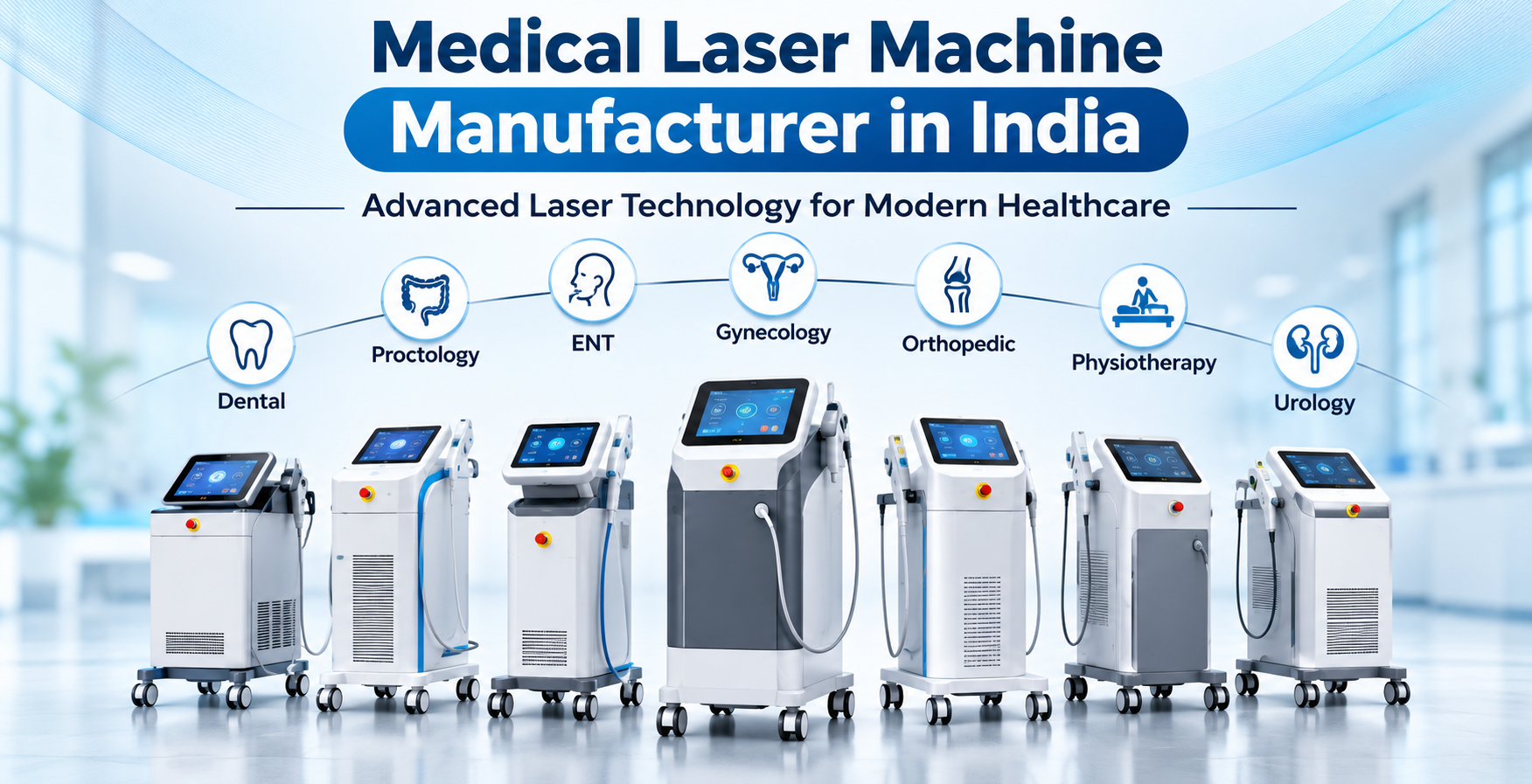
The healthcare industry in India is continuously evolving with advancements in medical technology, minimally invasive procedures, and precision-based treatment solutions. Among these developments, medical laser technology has become an important part of modern clinical practice. From dentistry and proctology to ENT, gynecology, orthopedics, physiotherapy, and urology, medical lasers are helping qualified healthcare professionals perform a wide range of specialised procedures.
Choosing the right Medical Laser Machine Manufacturer in India is an important decision for hospitals, surgeons, doctors, and healthcare institutions looking to integrate advanced laser technology into their clinical setup.
A reliable manufacturer should offer more than just medical equipment. Product quality, suitable wavelength configurations, technical expertise, clinical training, accessories, maintenance, and after-sales support are equally important factors.
Intense Medical & Dental System Pvt. Ltd. (IMDSL) is an Indian medical laser technology company offering laser solutions across multiple medical specialties. Its portfolio includes dental, proctology, ENT, gynecology, orthopedic, physiotherapy, and urology laser systems.
In this guide, we will explore the importance of medical laser technology, its applications, different types of laser machines, and the factors healthcare professionals should consider when selecting a medical laser equipment manufacturer.
What Is Medical Laser Technology?
Medical laser technology uses concentrated light energy for specific medical and surgical applications. Depending on the wavelength, power output, delivery system, and tissue interaction, different laser systems can support various clinical procedures.
Medical lasers are used in several healthcare specialties, including:
- Dental and oral surgery
- General and soft-tissue surgery
- Proctology procedures
- ENT treatments
- Gynecological applications
- Orthopedic and spine-related procedures
- Physiotherapy and rehabilitation
- Urological procedures
The selection of a suitable laser system depends on its intended medical application, technical specifications, approved indications, and the expertise of the healthcare professional.
Types of Medical Laser Machines Used in Modern Healthcare
A professional medical laser portfolio generally includes specialised systems designed for different clinical requirements.
1. Dental Laser Machine
Dental laser technology is increasingly being incorporated into modern dental practices. Diode lasers can support selected soft-tissue dental procedures by delivering controlled laser energy through specialised optical fibres.
Common dental applications include:
- Gingivectomy and gingivoplasty
- Frenectomy and frenotomy
- Periodontal procedures
- Soft-tissue lesion management
- Implant-related soft-tissue procedures
- Selected endodontic applications
- Laser-assisted dental treatments
IMDSL offers multiple dental laser systems, including Bright Plus Laser 10.2W (980nm + 650nm), Bright Dental Laser 8W (980nm), and Triveni Blue Laser 13.2W (980nm + 650nm + 450nm).
These systems provide different wavelength configurations for healthcare professionals evaluating laser technology for dental applications.
2. Proctology Laser Machine
Proctology laser technology is used by qualified surgeons for selected minimally invasive procedures involving anorectal conditions.
Depending on the system configuration and clinical technique, laser-assisted procedures may be considered for:
- Laser treatment of hemorrhoids
- Anal fistula procedures
- Selected fissure-related surgical applications
- Pilonidal sinus procedures
IMDSL offers specialised proctology laser systems, including:
- Aqua Plus Proctology Laser – 15.2W (1470nm + 650nm)
- Trident-P Laser – 30.5W (1470nm + 980nm + 650nm)
- Vital Lase – 15W (980nm)
The appropriate laser, fibre, and treatment technique should be selected according to the procedure and the manufacturer’s specifications.
3. ENT Laser Machine
ENT laser technology supports selected soft-tissue procedures involving the ear, nose, and throat.
It is used by trained ENT specialists for applications such as:
- Vocal cord lesion procedures
- Selected nasal soft-tissue procedures
- Tonsillar procedures
- Soft-tissue excision
- Other suitable ENT laser applications
IMDSL provides ENT laser options, including Fab Lase-E 15W (980nm) and Vital Lase-E 980 HD.
The choice of system depends on the specialist’s clinical requirements and the intended application.
4. Gynecology Laser Machine
Laser technology is also being explored in specialised gynecological practice. Depending on the device’s intended use and clinical indications, laser systems may support selected gynecological procedures.
IMDSL’s gynecology laser portfolio includes:
- Aqua Plus Laser 15.2W (1470nm + 650nm)
- Trident Gynecology Laser 30.5W (1470nm + 980nm + 650nm)
Gynecologists should evaluate wavelength, energy delivery, treatment protocols, patient suitability, and regulatory documentation before selecting a system.
5. Physiotherapy Laser Machine
Therapeutic laser technology is used in rehabilitation settings as part of selected physiotherapy and pain-management programmes.
Depending on the wavelength and treatment protocol, laser therapy may be incorporated into rehabilitation approaches for:
- Musculoskeletal discomfort
- Sports-related rehabilitation
- Selected joint and soft-tissue conditions
- Muscle-related discomfort
- Rehabilitation support
IMDSL offers Tejas-T (10W/1064nm) and Divine Lase-T (10W/980nm) for physiotherapy applications.
The treatment plan should always be based on an appropriate clinical assessment and professional judgement.
6. Orthopedic Laser Machine
Orthopedic laser technology has applications in specialised procedures involving the spine and musculoskeletal system.
IMDSL offers Aqua Plus Lase (15W, 1470nm + 650nm), designed for its orthopedic laser portfolio.
Healthcare professionals evaluating orthopedic laser equipment should consider the intended procedure, wavelength configuration, compatible delivery accessories, and manufacturer-supported clinical applications.
7. Urology Laser Machine
Urological laser technology is used in specialised procedures involving the urinary system. Different laser platforms are developed for different surgical applications.
Before selecting a urology laser system, healthcare providers should evaluate:
- Intended surgical applications
- Laser wavelength and output
- Fibre compatibility
- Energy and pulse controls
- Operating interface
- Safety features
- Regulatory documentation
- Training and technical support
A suitable system should be selected according to the urologist’s clinical requirements and the manufacturer’s approved intended use.
How to Choose the Right Medical Laser Machine Manufacturer in India?
Selecting a medical laser supplier requires careful consideration of both technical and service-related factors.
Here are some important points hospitals, clinics, and doctors should evaluate.
1. Product Portfolio and Specialisation
Look for a manufacturer that understands the requirements of different medical specialities.
A diverse product portfolio can help healthcare institutions evaluate suitable laser solutions for their specific departments.
2. Laser Wavelength and Power Configuration
Different medical applications require different wavelength and power configurations.
For example, 980nm, 1064nm, and 1470nm laser systems are used in different medical applications. However, wavelength alone does not determine the suitability or effectiveness of a system.
The complete configuration, fibre compatibility, energy control, and intended clinical application should be evaluated.
3. Product Quality and Regulatory Documentation
Medical laser equipment should be supported by appropriate quality documentation, applicable regulatory approvals, and manufacturer specifications.
Healthcare institutions should verify the validity and scope of relevant certifications and regulatory documents before purchasing.
4. Clinical Training and Technical Guidance
Training is an important part of adopting new medical technology.
Manufacturers should provide appropriate product demonstrations, operating guidance, and training support so qualified professionals can understand the system and its intended applications.
5. Accessories and Fibre Compatibility
Medical laser procedures often require specialised optical fibres and compatible accessories.
Before purchasing equipment, check the availability, specifications, compatibility, and replacement options for the accessories required for your intended procedures.
6. After-Sales Service and Maintenance
Long-term equipment performance depends on proper maintenance and timely technical assistance.
Consider the manufacturer’s service response, maintenance support, spare parts availability, warranty conditions, and service arrangements.
Why Medical Laser Technology Is Becoming Important in Healthcare
Modern healthcare increasingly focuses on precision, procedural efficiency, patient-specific treatment planning, and minimally invasive approaches wherever clinically appropriate.
Medical laser systems can support these objectives in selected applications.
Some important considerations include:
Controlled Energy Delivery: Laser systems allow healthcare professionals to select specific energy parameters according to the device and procedure.
Specialised Applications: Different laser configurations can support the requirements of multiple medical specialities.
Minimally Invasive Techniques: Certain laser-assisted procedures can be performed through less invasive approaches compared with selected conventional surgical techniques.
Clinical Versatility: Specialised laser systems can be incorporated into dental, surgical, ENT, proctology, and other medical practices.
Technology Integration: Modern equipment can support the development of specialised clinical services when combined with appropriate expertise and training.
It is important to remember that clinical benefits vary according to the procedure, patient condition, equipment configuration, and treating professional’s experience.
Why Choose IMDSL for Medical Laser Equipment?
Intense Medical & Dental System Pvt. Ltd. (IMDSL) focuses on developing and providing medical laser solutions for healthcare professionals across India.
The company’s approach combines medical laser technology with product training, technical assistance, and long-term customer support.
A Multi-Speciality Laser Portfolio
IMDSL offers specialised laser systems across:
- Dental
- Proctology
- ENT
- Gynecology
- Orthopedics
- Physiotherapy
- Urology
Multiple Wavelength Configurations
Its product range includes different wavelength combinations, allowing healthcare professionals to evaluate systems according to their intended clinical applications.
Structured Clinical Training
IMDSL provides structured training and operational guidance to help healthcare professionals understand the equipment and its intended use.
Technical and Service Support
The company emphasises responsive technical assistance, maintenance guidance, and support for its installed equipment.
Indian Manufacturing Presence
IMDSL operates a manufacturing facility in Bhopal, Madhya Pradesh, and has its corporate office in Delhi, India.
For hospitals, clinics, and healthcare professionals looking for a specialised medical laser partner, evaluating the manufacturer’s product range and service capabilities is an important part of the purchasing process.
Medical Laser Machine Manufacturer in India: What Should Hospitals and Doctors Know Before Purchasing?
Before investing in medical laser equipment, healthcare providers should create a clear list of clinical and technical requirements.
Consider the following checklist:
- Identify the speciality and procedures for which the machine will be used.
- Review the technical specifications and intended use of the equipment.
- Evaluate the available wavelengths and power configurations.
- Check compatible optical fibres and accessories.
- Verify safety features and operating requirements.
- Review applicable regulatory approvals and quality documentation.
- Understand installation and training arrangements.
- Compare warranty and maintenance conditions.
- Evaluate technical support and spare parts availability.
- Request a product demonstration before making a purchasing decision.
This approach helps healthcare institutions make an informed equipment selection based on clinical needs rather than promotional claims alone.
Frequently Asked Questions (FAQs)
1. What does a medical laser machine manufacturer do?
A medical laser machine manufacturer develops, manufactures, or supplies specialised laser equipment for medical and surgical applications. Its responsibilities may include product development, quality testing, accessories, technical documentation, training, and after-sales support.
2. Which types of medical laser machines are available at IMDSL?
IMDSL offers laser systems for dental, proctology, ENT, gynecology, orthopedic, physiotherapy, and urology applications.
3. Which laser wavelengths are used in medical applications?
Different medical laser systems use wavelengths such as 650nm, 980nm, 1064nm, and 1470nm, among others. The appropriate wavelength depends on the intended application, tissue interaction, equipment configuration, and clinical protocol.
4. What is a diode laser machine used for?
Diode laser machines are used in selected medical and surgical applications, including dental and soft-tissue procedures. Specific uses depend on the device’s specifications and approved intended purpose.
5. Why is clinical training important when purchasing a medical laser?
Clinical training helps qualified healthcare professionals understand equipment operation, safety requirements, compatible accessories, and manufacturer-recommended procedures.
6. What should I check before purchasing a medical laser machine?
Review the wavelength, power output, energy controls, accessories, fibre compatibility, safety features, regulatory documentation, warranty, training, and after-sales support.
7. Does IMDSL provide technical and after-sales support?
IMDSL highlights technical assistance, structured training, and service support as part of its medical laser equipment offering. Contact its team to understand the support arrangements available for a particular product.
8. Can one medical laser machine be used for multiple specialities?
Some laser platforms offer multiple configurations or applications, but not every machine is suitable for every speciality. Always check the manufacturer’s specifications, approved intended use, and compatibility requirements.
9. Where is IMDSL located?
IMDSL has its corporate office in Delhi and its manufacturing facility in Bhopal, Madhya Pradesh, India.
Conclusion
Medical laser technology is becoming an important component of specialised healthcare, supporting qualified professionals across dentistry, proctology, ENT, gynecology, orthopedics, physiotherapy, and urology.
Selecting the right manufacturer requires more than comparing machine prices or technical specifications. Product quality, wavelength configuration, intended applications, compatible accessories, clinical training, regulatory documentation, and after-sales service all play an important role.
Intense Medical & Dental System Pvt. Ltd. (IMDSL) offers a multi-speciality portfolio of medical laser solutions designed for the evolving requirements of hospitals, clinics, surgeons, dentists, and healthcare professionals.
If you are evaluating a Medical Laser Machine Manufacturer in India, explore the IMDSL product portfolio and connect with its team to understand the laser solutions suitable for your clinical requirements.