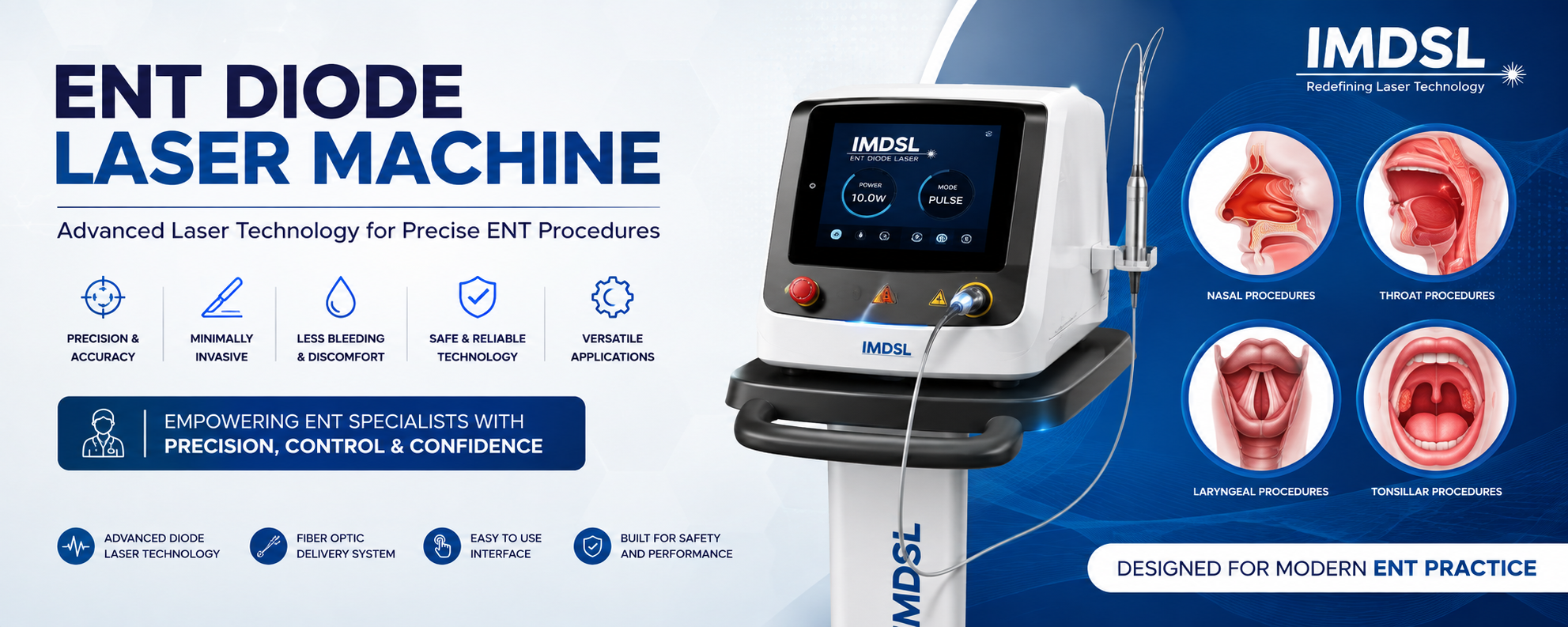
ENT Diode Laser Machine: Advanced Laser Technology for Modern ENT Procedures
When precision, control, and minimally invasive treatment matter, advanced laser technology can make a significant difference in modern ENT practice. An ENT Diode Laser Machine is designed to support ENT specialists in a wide range of soft-tissue procedures by delivering controlled laser energy with high precision.
IMDSL offers advanced medical laser solutions designed to meet the evolving requirements of ENT specialists, clinics, and hospitals. With appropriate wavelength selection, power control, and treatment settings, diode laser technology can be used for several soft-tissue applications while supporting efficient clinical workflows.
What Is an ENT Diode Laser Machine?
An ENT Diode Laser Machine is a medical laser system that uses semiconductor diode technology to generate laser energy for procedures involving soft tissue in the ear, nose, and throat region.
Depending on the system configuration and wavelength, diode lasers can provide controlled tissue interaction, allowing clinicians to perform selected procedures with precision. Their compact design, adjustable settings, and versatility make them a useful technology for modern ENT departments.
IMDSL provides diode laser systems developed for professional medical applications, with features focused on precision, operational flexibility, and clinical usability.
How Does an ENT Diode Laser Work?
An ENT diode laser converts electrical energy into concentrated laser light through a semiconductor diode. The emitted wavelength interacts with tissue according to its optical properties.
During an appropriate procedure, the clinician selects suitable parameters such as:
- Laser wavelength
- Output power
- Continuous or pulsed mode
- Exposure duration
- Fibre type and delivery method
The laser energy is then delivered to the target tissue through a suitable handpiece or optical fibre. The exact settings depend on the procedure, tissue characteristics, and clinical judgment.
Key Benefits of an ENT Diode Laser Machine
An advanced ENT Diode Laser Machine can offer several potential advantages when used appropriately by trained medical professionals.
1. Precise Energy Delivery
Laser energy can be focused on a specific treatment area, supporting controlled tissue interaction and precision.
2. Minimally Invasive Approach
For suitable procedures, laser technology may allow clinicians to work with limited tissue disruption compared with some conventional techniques.
3. Excellent Control
Adjustable power and operating modes provide clinicians with greater control over laser energy delivery according to the procedure.
4. Efficient Procedure Workflow
Diode laser systems can be integrated into modern ENT practices for selected soft-tissue applications, potentially supporting efficient treatment workflows.
5. Compact Technology
Many diode laser systems are designed with a compact footprint, making them suitable for clinics, hospitals, and procedure rooms where space is important.
6. Versatile Applications
Depending on the wavelength, accessories, and configuration, diode lasers can support multiple ENT soft-tissue procedures.
7. Fibre-Based Delivery
Optical fibres can allow laser energy to be delivered to specific treatment sites, including areas that may be difficult to access with conventional instruments.
ENT Applications of Diode Laser Technology
The applications of an ENT Diode Laser Machine depend on the wavelength, machine specifications, accessories, and the clinician’s intended procedure.
Potential applications may include selected procedures involving:
- Nasal soft tissue
- Turbinate tissue
- Oral and pharyngeal soft tissue
- Tonsillar tissue
- Vocal and laryngeal soft tissue
- Lesion management
- Soft-tissue coagulation
- Selected minor ENT procedures
The suitability of laser treatment should always be evaluated by a qualified ENT specialist based on the patient’s condition and the specific laser system being used.
Why Choose IMDSL for an ENT Diode Laser Machine?
IMDSL focuses on providing advanced medical laser technology for healthcare professionals. When selecting an ENT Diode Laser Machine, clinicians should consider more than the machine’s headline power.
Important factors include wavelength, power range, operating modes, fibre compatibility, ergonomics, safety features, service support, and suitability for intended procedures.
IMDSL’s medical laser solutions are designed with these practical requirements in mind, helping healthcare professionals choose technology aligned with their clinical needs.
Important Features to Consider Before Buying an ENT Diode Laser Machine
Before investing in an ENT Diode Laser Machine, hospitals and clinics should evaluate:
Wavelength
Different wavelengths interact differently with biological tissues. Selecting an appropriate wavelength is important for achieving the desired tissue effect.
Power Output
The required power range depends on the intended applications. A system with adjustable output can provide greater flexibility.
Operating Modes
Continuous, pulsed, or other operating modes may provide different options for energy delivery depending on the laser system.
Fibre Compatibility
Check whether the system supports the fibre sizes and delivery accessories required for your intended procedures.
User Interface
An intuitive interface can make parameter selection and routine operation easier for trained clinicians.
Safety Features
Laser safety features, warning systems, protective accessories, and appropriate operating protocols are important considerations.
Technical Support
After-sales service, training, maintenance, and availability of accessories should also be evaluated before purchasing a medical laser system.
ENT Diode Laser Machine vs Conventional ENT Instruments
Traditional ENT instruments remain important for many procedures. However, laser technology provides an additional treatment option for selected applications.
A diode laser can offer controlled energy delivery, precise tissue interaction, and coagulation capabilities. Conventional instruments, meanwhile, may be preferable for procedures where mechanical cutting, grasping, or other techniques are required.
Therefore, an ENT Diode Laser Machine should be considered a complementary technology rather than a universal replacement for conventional ENT equipment.
Who Can Use an ENT Diode Laser Machine?
Medical laser systems should be operated only by appropriately trained and qualified healthcare professionals who understand laser safety, tissue interaction, clinical indications, and the specific operating requirements of the device.
ENT specialists should follow applicable clinical guidelines, manufacturer instructions, laser safety protocols, and institutional requirements when using the equipment.
Frequently Asked Questions About ENT Diode Laser Machine
1. What is an ENT Diode Laser Machine?
An ENT Diode Laser Machine is a semiconductor laser system designed to deliver controlled laser energy for selected ear, nose, and throat soft-tissue procedures.
2. What are diode lasers used for in ENT?
Depending on the wavelength and system configuration, diode lasers may be used for selected soft-tissue procedures, coagulation, lesion management, and procedures involving nasal, oral, pharyngeal, or laryngeal tissues.
3. Is an ENT diode laser suitable for every ENT procedure?
No. Laser suitability depends on the patient’s condition, treatment objective, tissue characteristics, laser wavelength, system configuration, and the clinician’s professional judgment.
4. What wavelength is best for an ENT diode laser?
There is no single wavelength that is universally best for every ENT application. The appropriate wavelength depends on the desired tissue interaction and intended clinical procedure.
5. What should I consider when buying an ENT Diode Laser Machine?
Consider wavelength, power range, operating modes, fibre compatibility, safety features, ease of use, accessories, technical support, training, maintenance, and suitability for your intended procedures.
6. Can a diode laser reduce bleeding during ENT procedures?
Laser energy can coagulate suitable tissues during certain procedures. However, clinical outcomes depend on the procedure, tissue characteristics, laser parameters, and the clinician’s technique.
7. Is an ENT diode laser minimally invasive?
For selected procedures, diode laser technology may support minimally invasive treatment approaches. The level of invasiveness depends on the specific procedure and clinical technique.
8. Is an ENT Diode Laser Machine safe?
Medical lasers can be used safely when operated by trained professionals following appropriate laser safety procedures, manufacturer instructions, protective measures, and clinical protocols.
9. Why choose IMDSL for medical laser equipment?
IMDSL provides medical laser technology designed for professional healthcare applications, with emphasis on precision, functionality, clinical versatility, and dependable support.
10. How can I choose the right ENT diode laser for my clinic?
Start by identifying the procedures you intend to perform, then compare suitable wavelengths, power requirements, operating modes, fibre options, safety features, accessories, service support, and overall system compatibility.
Conclusion
An ENT Diode Laser Machine can be a valuable addition to modern ENT practice when the technology is appropriately matched to clinical requirements. Its controlled energy delivery, precision, versatility, and fibre-based application make diode laser technology suitable for a range of selected ENT soft-tissue procedures.
With advanced medical laser solutions from IMDSL, ENT specialists and healthcare institutions can explore laser technology designed around modern clinical requirements. Before purchasing a system, always evaluate its specifications, intended applications, safety features, training requirements, and after-sales support.
IMDSL – Advanced Medical Laser Technology for Modern Healthcare.